Of Moral Hazards
During my adult life I have experienced 3 major banking crises. The first dates back to the Savings & Loan crash of 1987. The second was the credit default fiasco of 2008-2009 that crushed the Lehman Brothers firm and also tanked the S&P 500 by -49.9%. Now we have the Silicon Valley Bank (SVB), Signature Bank, and Credit Suisse sending shock waves throughout the banking system.
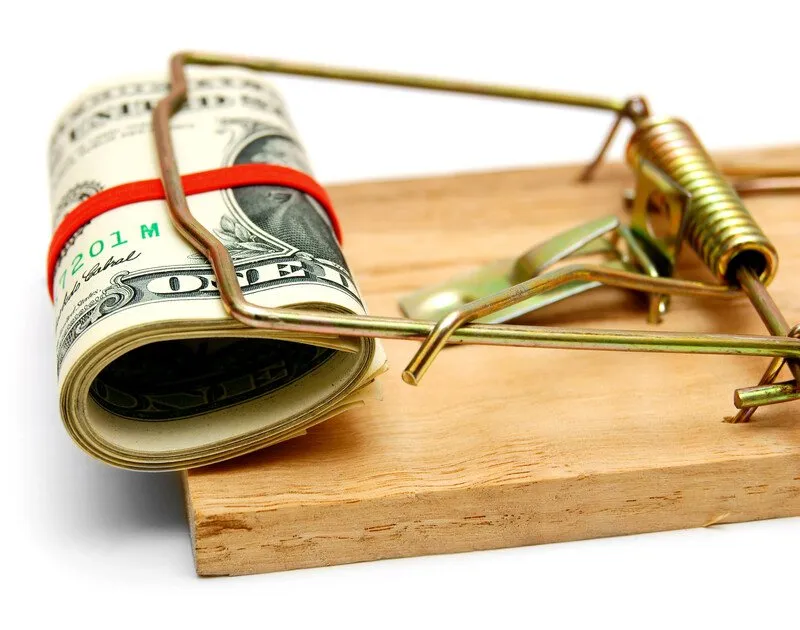
All three crises, it seems to me, have some degree of moral hazard. Wikipedia defines economic moral hazard as: “In economics a moral hazard is a situation where an economic actor has an incentive to increase its exposure to risk because it does not bear the full cost of that risk. For example, when a corporation is insured it may take on higher risk knowing that its insurance will pay the associated cost.”
Sometimes the tax law and public policies provide the incentive to take on risk. This was especially true leading up to the near depression of 2008-2009. To help expand home ownership in poorer neighborhoods, loan underwriting standards were relaxed. Previously, borrowers would have to put down 30% or more of the purchase price in order to have a no-doc (documentation) loan. This means that neither their income, assets, nor employment would be verified by the bank. Suddenly, anyone could get a no-doc loan, and in some neighborhoods, loans were being pushed and sold at an alarming rate. Couple this with very low mortgage interest rates for the first couple years, and people who should have never been approved for a loan were on the short end of the moral hazard stick. Indeed, many lost their homes.
The banking community called these loans sub-prime because they were obviously riskier. Some bright person came up with the idea of selling credit default swaps to insure sub-prime loans against default so that they could be sold to pension funds and such. Possibly a good idea, except the insurance company was not funding this liability. This was moral hazard on steroids.
In the past 3 years a couple trillion bucks have been printed, just because we can, causing steep inflation. Today, banks have investments in bonds that pay the bank 3%, whilst paying out 4.5% on CDs to customers – not sustainable. Some banks took on more risk, such as SVB, and got caught with their financial trousers down. There is a lot more to the story, but let’s say moral hazard was front and center.
I am persuaded that by bailing out the banks we absolved the bank board and executives, as well as investors from taking too much risk, and acting imprudently. If you had a million in cash, would you place it all in one local bank where only $250,000 is insured? Or would you act prudently, and place it in four or more banks to protect your nest egg? The Federal Reserve just made all the depositors at SVB whole, disregarding the FDIC 250K limit. Many see this as incentivizing moral risk and rewarding poor investment choices.
At some point the Government will not be able to bailout all the banks. It might be time to let the free market correct and change bad behavior. It often takes pain to change. In the meantime, it would be good to teach bankers and investors about John Wesley’s theology of money. The center of his teaching is not taking advantage of customers and competitors, and doing no harm. These are the virtues that need to be lifted up and put into practice as the antidote to moral hazard. Capitalism, as Jefferson noted, requires a moral people.